
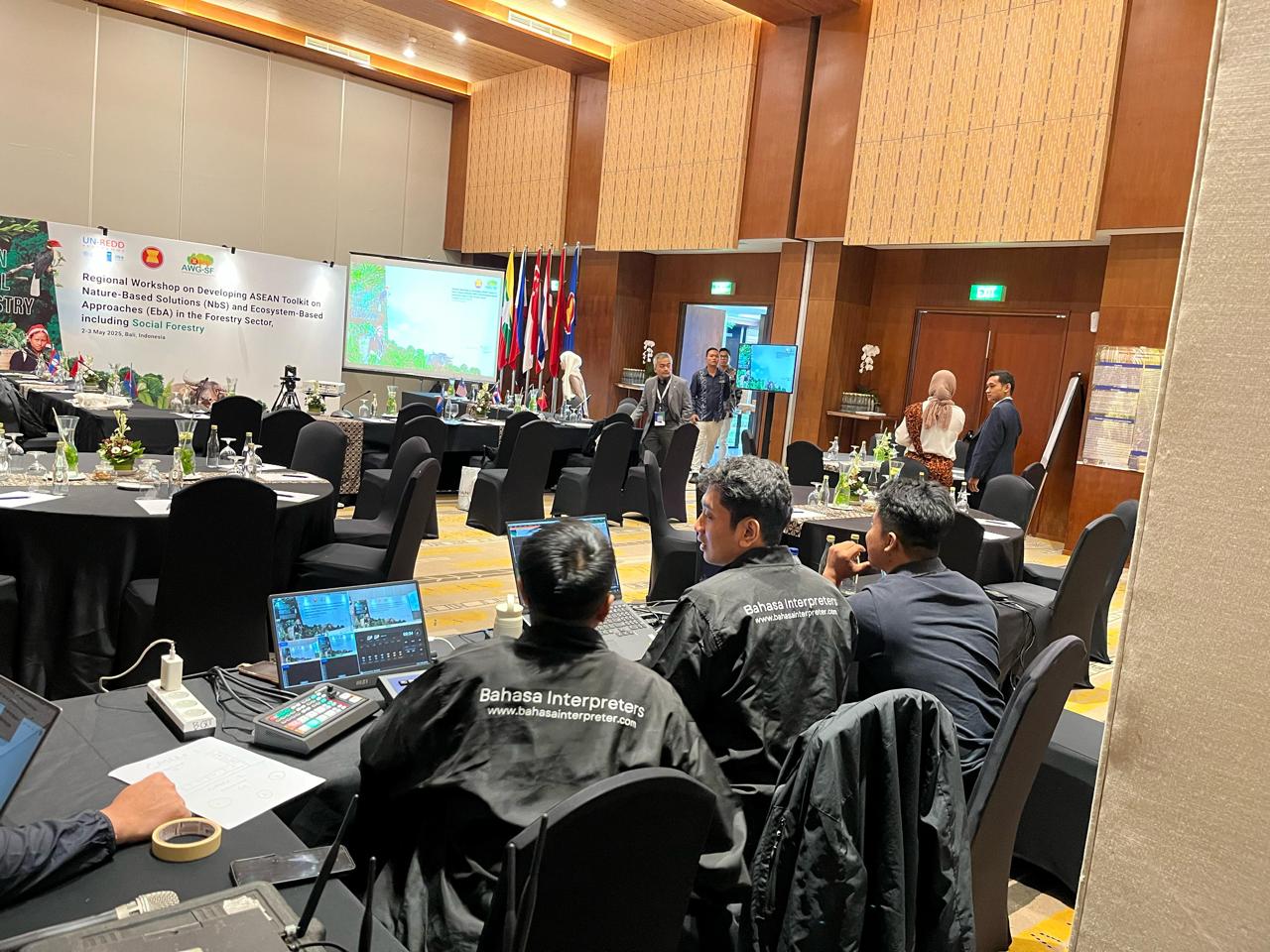
Hybrid meetings—a combination of onsite and virtual participation—may appear simple on the surface. Some participants join the session in person, while others connect remotely. With a few clicks, online attendees enter the meeting and communication begins. Yet behind this seemingly seamless experience lies a complex technical operation that requires careful preparation, constant monitoring, and swift problem-solving. This is where the hybrid meeting operator becomes an essential part of every successful event.


A hybrid meeting relies on audiovisual equipment, extensive cabling, and a strong, stable internet connection—not only in the meeting room, but also at the locations where remote speakers and participants are joining. The complexity increases further when the meeting is supported by simultaneous interpretation, whether the interpreters are working onsite, remotely, or in a hybrid setup themselves. In these situations, the operator must have the technical knowledge to manage interconnected systems, the situational awareness to anticipate potential issues, and the confidence to take immediate action when problems arise.
In practice, supporting remote interpreting involves far more than simply opening a virtual meeting room. It requires careful audio routing, coordination of multiple language channels, continuous monitoring of internet stability, ensuring recording quality, managing participant access, and maintaining overall meeting order. Interpreters—who carry the responsibility of delivering accurate and faithful communication—depend heavily on these behind-the-scenes professionals. Hybrid meeting operators are, in many ways, the unsung heroes of every multilingual event.
The operator’s responsibilities extend across the entire lifecycle of a meeting. They prepare and manage meeting links, assign and standardize participant names, control recording functions, manage microphones, keep the meeting structured, and maintain accurate documentation throughout each session. In many cases, they also provide full meeting recordings or transcriptions to clients after the event has concluded.
Every meeting is handled with careful preparation. Backup systems are always in place, because even a minor technical issue can disrupt not only the interpreters, but the entire flow of communication. For example, if a participant uses an inappropriate microphone, the interpreter may miss critical information. If an internet connection becomes unstable, a secondary network must be activated within seconds to avoid interruptions.


A successful hybrid meeting operator must remain calm, focused, and precise under pressure. Technical issues are inevitable, but it is the operator’s composure and quick decision-making that determine whether a meeting continues smoothly or descends into chaos. This is why we often remind clients and participants to be kind to the operator. Even when they appear to be quietly watching a screen, they are continuously monitoring countless details to ensure everything runs as it should.
Within our team, there is a simple saying:
“A bored hybrid operator is better than a hectic one.”
Because when an operator suddenly becomes busy, it usually means a problem has emerged—and they are already working to resolve it.
Behind every successful hybrid meeting is a Zoom operator quietly guarding stability, ensuring communication remains uninterrupted, and making complex systems appear effortless.
Contributors: Bayu Agastya
Bahasa Interpreters Bali
Interpreters in Bali and Beyond
Leave a Reply