
Public health interpreting in Indonesia presents a unique set of challenges that go far beyond linguistic ability. Unlike formal conferences with structured presentations, many health-sector discussions — particularly Focus Group Discussions (FGDs) — are dynamic, informal, and heavily shaped by local context. Participants often speak naturally, using abbreviations, acronyms, and technical jargon that are deeply familiar to them but unfamiliar to outsiders.
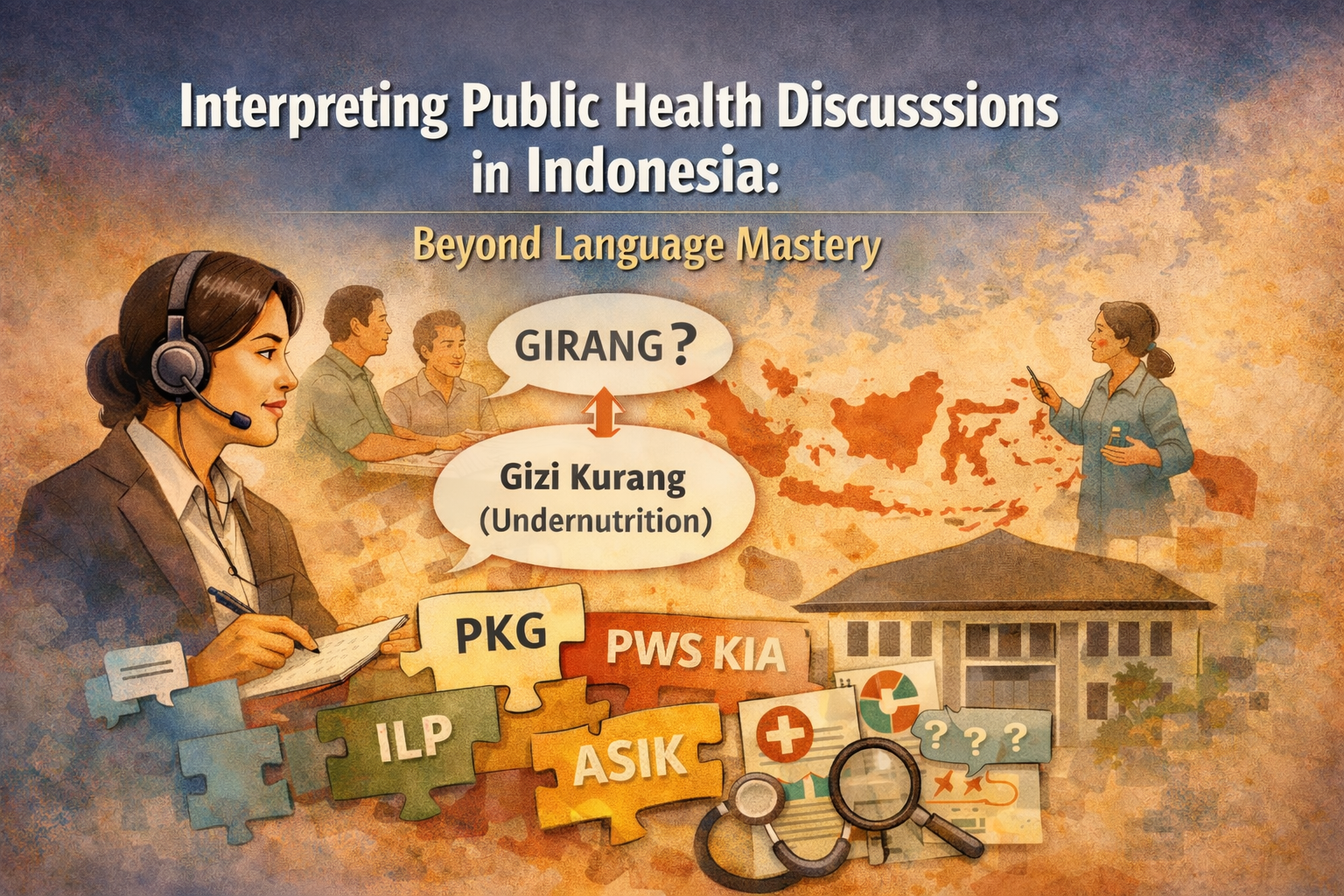
Indonesia’s public health ecosystem is rich with institutional terminology. Programs, directorates, indicators, and reporting systems are frequently referred to using shortened forms: PKG, PWS KIA, ILP, GDS, ASIK, and many others. For health professionals, these terms are everyday language. For interpreters, however, each acronym represents a potential risk if not fully understood within its policy and programmatic context.
One experience during an FGD illustrates this challenge clearly. A speaker mentioned the word “girang.” Literally, the Indonesian word means “very happy.” Translating it that way would have sounded positive and harmless. Yet in this discussion, GIRANG was actually an acronym referring to “gizi kurang” (undernutrition). The meaning shifted entirely from emotional expression to a serious public health condition. Without quick analytical thinking and contextual awareness, the interpretation could have delivered a completely misleading message.
Situations like this are common in FGDs, where conversations flow freely without slides or prepared materials. Participants may switch between technical terminology, regional expressions, and institutional shorthand. Many of these terms are not searchable online because they emerge from internal programs, pilot initiatives, or local implementation practices.
For this reason, interpreters working in public health must understand more than vocabulary. They need familiarity with Indonesia’s health system, government structures, national policies, and ongoing programs. Knowledge of how ministries operate, how data indicators are discussed, and how frontline health workers communicate becomes essential preparation.
Equally important is cognitive agility. Interpreters must listen, analyze, and infer meaning in real time, using logic and contextual clues when direct references are unavailable. Preparation through glossary building helps, but adaptability during live discussions is what ultimately ensures accuracy.
Public health interpreting is therefore not merely about bilingual fluency. It is about bridging technical knowledge, local realities, and human communication — ensuring that critical health information is conveyed accurately, responsibly, and with full awareness of its real-world implications.
Contributor: Luh Windiari, HPI-Certified Interpreter and Legal Translator
Bahasa Interpreters, your Indonesian Interpreters in Bali and Beyond
For interpreter service in Bali, you can contact us at: info@bahasainterpreters.com
WhatsApp Message at: +62 819-2777-1115
Leave a Reply