
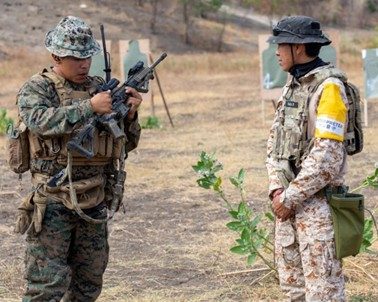
What does it really take to work as a civilian military interpreter? Many people assume it is simply about speaking two languages fluently. In reality, military interpreting goes far beyond translation. From supporting joint military exercises to navigating rank structures, field conditions, and strict security protocols, civilian military interpreters play a crucial role in international military cooperation.
This profession requires more than vocabulary and grammar. It demands cultural awareness, discipline, mental agility, and the ability to perform under pressure. Civilian interpreters often operate in dynamic environments where clarity and accuracy can directly impact coordination, safety, and mission outcomes.
Military Interpreting Is Not Just Translation
Unlike interpreters portrayed in movies or television, civilian interpreters working with the military are not typically required to complete formal military basic training. However, the absence of basic training does not make the role easy. The job remains highly demanding and requires serious preparation.
Military interpreting combines language skills with situational awareness. Interpreters must quickly process information, understand context, and deliver accurate interpretations in real time. Misinterpretation can lead to confusion, delays, or operational friction between partner forces.
Assignments often involve liaising with officers, non-commissioned officers (NCOs), and personnel involved in bilateral or multinational exercises. In these situations, interpreters do more than relay words — they help ensure mutual understanding between forces from different linguistic and cultural backgrounds.
Understanding Military Culture and Rank Structure
A strong understanding of military culture and hierarchy is essential for any civilian military interpreter. Military organizations operate under strict chains of command, and respecting protocol is a non-negotiable part of the environment.
Knowing how to address personnel properly is a small detail that carries significant weight. Officers are typically addressed as “sir” or “ma’am,” while enlisted personnel often prefer their rank and last name to be used. This demonstrates professionalism and respect for the institution.
Beyond forms of address, interpreters must understand how military communication works. Orders, briefings, and reports often follow structured formats. Interpreters who understand these formats can anticipate language patterns and interpret more accurately.
Cultural sensitivity is equally important. Each country’s military has its own traditions, communication styles, and expectations. A culturally aware interpreter can prevent misunderstandings and build trust between units.
Field Interpreting in Real-World Conditions
One of the biggest misconceptions about civilian military interpreting is that it always takes place in meeting rooms or command centers. In reality, many assignments occur in the field.
Field interpreting can involve:
- Accompanying troops during training exercises
- Traveling through forests or jungle terrain
- Working in extreme heat or heavy rain
- Operating in noisy or high-stress environments
These conditions require physical stamina and mental resilience. Interpreters must remain focused even when tired, uncomfortable, or under time pressure.
In addition, interpreters must follow Operational Security (OPSEC) and Personal Security (PERSEC) protocols. They may encounter sensitive or classified information, and maintaining confidentiality is critical. Professional integrity and discretion are essential traits.
Communication Under Pressure
Military environments are often fast-paced. Briefings may be rapid, instructions concise, and terminology highly specialized. Interpreters must think quickly while maintaining accuracy.
Supporting infantry or maneuver units requires additional awareness. Interpreters must:
- Keep pace physically with units
- Maintain noise discipline
- Stay alert to surroundings
- Coordinate quickly with partner-nation forces
Unlike conference interpreting, there is rarely time to pause or ask for repetition. The ability to stay calm and focused under pressure is what separates a capable interpreter from an excellent one.
Beyond Language: Soft Skills Matter
Technical language ability alone is not enough. Successful civilian military interpreters also need strong soft skills.
Key qualities include:
- Professionalism
- Reliability
- Emotional intelligence
- Adaptability
- Teamwork
Interpreters often work closely with the same units over extended periods. Building rapport and trust improves communication flow and teamwork. A respected interpreter becomes a valuable bridge between forces.
Coordination in Emergency Situations
Military exercises can include realistic emergency scenarios. Interpreters may need to assist communication during medical evacuations, safety incidents, or coordination with military police.
Clear interpretation in these moments is vital. Miscommunication during emergencies can slow response times or create confusion. This is why experienced interpreters treat preparation seriously and stay mentally ready for unexpected situations.
Attending planning meetings or daily briefings can also be part of the role. Interpreters may help convey leadership intent, operational goals, and coordination plans. Their work supports alignment between multinational partners.
Preparation and Continuous Learning
Strong military interpreters rarely rely on language skills alone. They prepare before assignments by:
- Studying terminology and acronyms
- Reviewing exercise backgrounds
- Learning rank structures
- Understanding partner-nation cultures
- Preparing glossaries
Continuous learning is a major advantage. The more familiar an interpreter is with military terminology and procedures, the more confident and accurate they become.
Is This Career Right for You?
Working as a civilian military interpreter can be demanding, but it is also rewarding. It offers unique experiences, international exposure, and the opportunity to support meaningful cooperation between nations.
However, it is not a role for everyone. It requires discipline, resilience, and a willingness to operate outside comfort zones. Those who succeed often enjoy structured environments and high-responsibility roles.
Conclusion
Being a civilian military interpreter means being prepared for uncertainty, responsibility, and physical challenges. It is a profession that sits at the intersection of language, culture, and military cooperation.
Far from being “just translation,” military interpreting is about enabling understanding where it matters most. When communication is clear, cooperation improves — and in military contexts, that clarity can make a real difference.
Contributor: Nanda Wijaya
Bahasa Interpreters, Your Indonesian Interpreters in Bali and Beyond
Leave a Reply